
Dr Stefan Buttigieg is a Specialist in Public Health Medicine at Malta’s Ministry for Health and Active Ageing, where he works across health data governance, public health information systems and electronic patient records. An internationally recognised keynote speaker with 75+ engagements, he also lectures at the University of Malta and serves as Vice-President of the EUPHA Digital Health Section, with a focus on advancing sustainable, equitable and AI-enabled digital health.
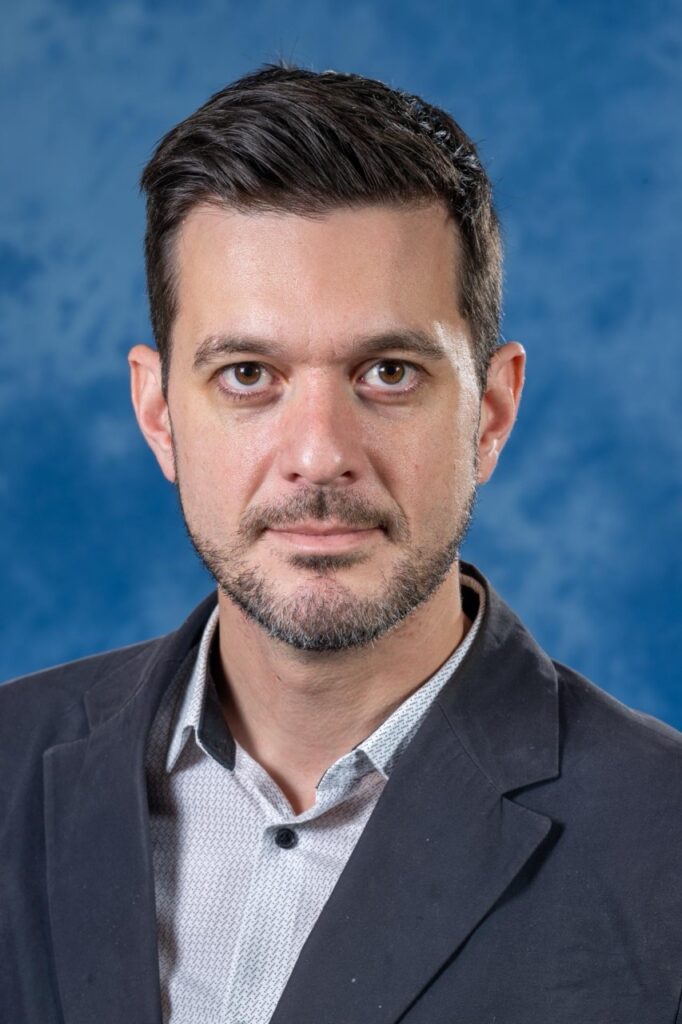
I spent three wonderful days in Amsterdam for EHRCON26. It turned out to be a true full circle moment.
The annual openEHR International Conference took place at the Meervaart Theatre in Amsterdam on 22 and 23 September 2026. I attended as part of the 2026/27 openEHR Fellowship cohort, which meant I arrived with a particular lens. I wasn’t just there to learn about a standard. I was there to meet the community that builds it, and to see whether I belonged in it.
The short answer is that I do. I found a welcoming community fully focused on building the next generation of EHRs. The longer answer is this article.
A conference built for conversation
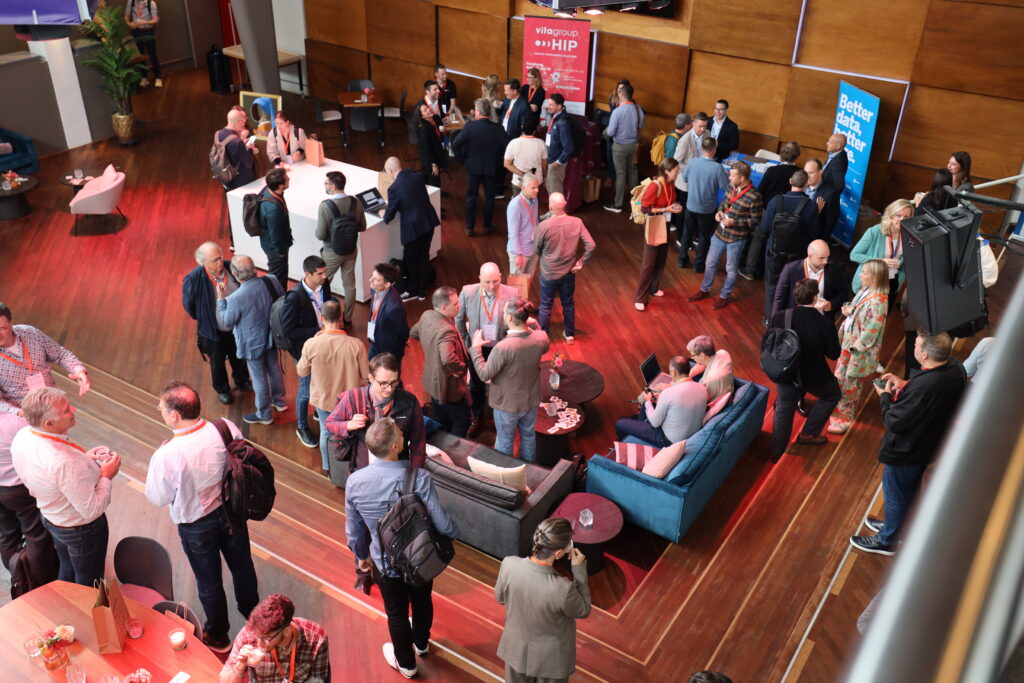
The first thing I noticed was the vibe. It was chilled, intellectually stimulating and visionary, all at once.
Many health IT, digital health or MedTech conferences (not all!) feel like a trade floor. You move from booth to booth, collect lanyards, rush from one session to another and leave with a bag of brochures. EHRCON26 felt different. Clinicians, modellers, developers, researchers and vendors mixed easily, and nobody seemed in a rush to be somewhere else.
The programme covered serious ground: interoperability, patient-centred care, sustainability, the European Health Data Space and the growing role of agentic AI. Yet the most valuable moments often happened between sessions. Over coffee, in the corridors and at the end of the day, there was always time for an enlightening conversation.
The clinical modelling and knowledge community was the real treasure. As a fellow, I picked up insights from them that I would have struggled to find online. Some things are only learnt by sitting next to the person who built the archetype.
I think this says something about the openEHR community itself. When the goal is shared, open infrastructure, people have less reason to guard their ideas and more reason to talk.
Highlights
A few moments, and a few slides, have stayed with me since Amsterdam.
“We won the architecture argument”
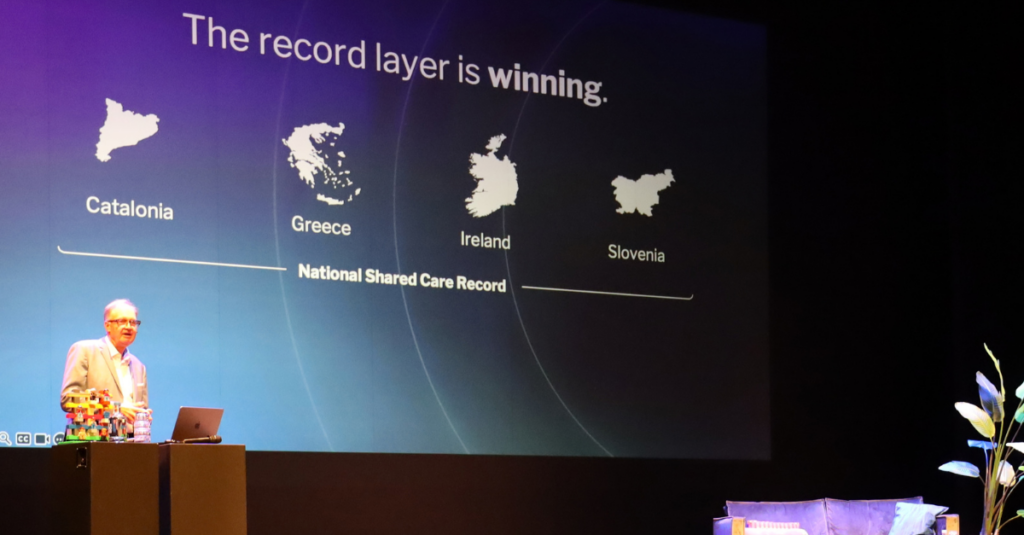
Tomaz Gornik, CEO of Better, opened with a bold claim: the record layer is winning. He pointed to Catalonia, Greece, Ireland and Slovenia, each building a national shared care record on openEHR.
His next point was even bolder. The cost of an application has collapsed, from years to weeks. The reason is governed, already accredited services (a CDR, a FHIR repository, authentication, validation, archetype design, AQL) that developers and AI can both call.
For someone who has spent years watching national health IT projects take far longer than planned, this was a striking reframe. The hard part is no longer the architecture. It is adoption and I would dare say, change management.
Ireland’s Shared Care Record, from concept to reality
Gar Mac Críosta (HSE) and Alastair Allen (EY) walked us through Ireland’s Shared Care Record. It sits within the MyHealth@IE programme, alongside MyHealth@EU cross-border exchange and the HSE Health App.
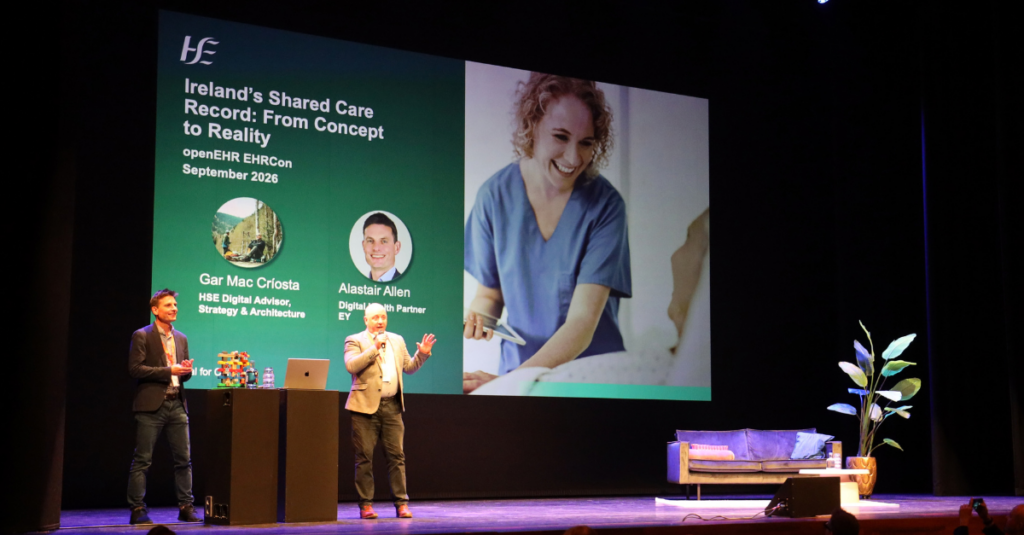
Having spent years on Malta’s MyHealth@EU participation, I found this especially close to home. Here was a similar-sized system joining national records, patient access and cross-border exchange into one patient-centred picture.
Fund maintenance, not projects
Nictiz framed the Dutch approach as a triangle. Care providers take ownership, vendors co-develop, and government funds maintenance rather than one-off projects.
That last point deserves a louder voice in every ministry I know. Standards die when the project money runs out.
Herko Coomans of the Netherlands Ministry of Health, Welfare and Sport made a related point. We have come a long way, but if we keep doing what we did, we will only get what we already have.
Building blocks you can assemble today
Sebastian Iancu of Cadasto showed during one of the parallel sessions, an open stack that makes clinical innovation composable. Its layers were standardised data models, an openEHR-based CDR, openEHR REST plus HL7 FHIR APIs, and SMART-on-FHIR apps.
What caught my eye was the AI layer. The stack includes MCP-based assistants and plugins built on openEHR models, and specifications published with llms.txt so AI tools can read them. Underneath sit the things that make it trustworthy: CKM governance, versioning, identity and consent, and audit.
The supply chain to solve problems
Sidharth Ramesh mapped the openEHR ecosystem against the general data market, across platforms, tools, and talent and services. The openEHR-specific supply chain is richer than ever. It still costs more and moves more slowly than general-market cloud and data tools.
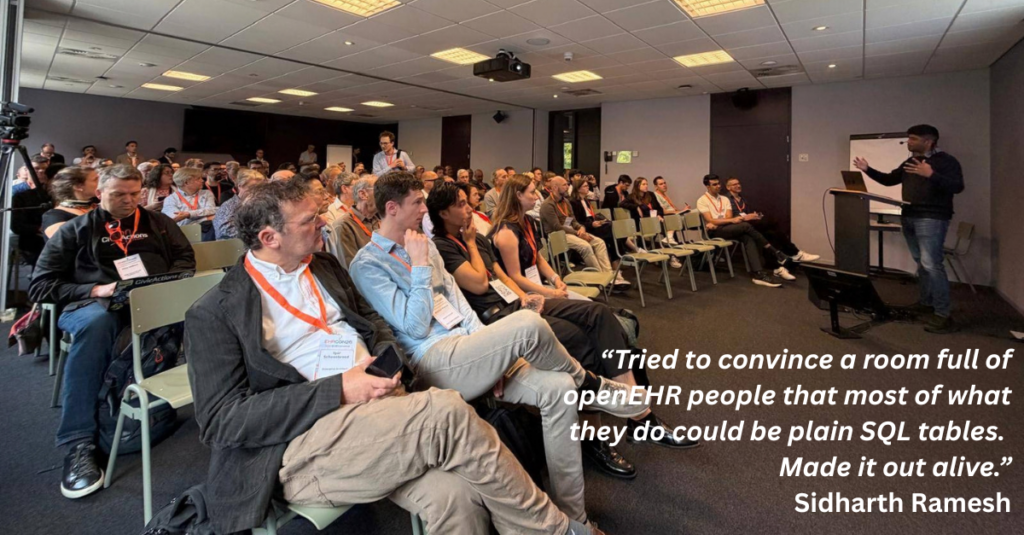
The challenge, then, is to connect the two, so openEHR benefits from the scale of the wider market without losing its clinical depth. The Health Tables proposition and the call for arms using the SQL angle, gave me some food for thought. Pragmatism and practicality was the keyword during this presentation.
The people, and the Archetypes
If I had to name the real outcome of EHRCON26, it would be the people.
The moment that summed up the whole conference was entirely unplanned. An impromptu band formed from members of the community, and they called themselves The Archetypes. Of course they did. I ended up singing with them and playing a little drums. Where else would clinical modellers, developers and a public health doctor share a stage and a setlist?
There was play in the corridors too. Veratech brought a retro arcade cabinet, and I couldn’t resist a photo beside it with David Moner Cano, my fellowship supervisor. Moments like this are small, but they make the serious conversations easier. You talk differently to someone you have just laughed with.
It was so good to meet Severin Kohler, Victoria Bonomo, Loes Jaspers, Jan de Lange, Peter Janes, David Moner Cano, Diego Boscá Tomás, Chandra Shekhar Sengupta, Esteban Hebel, Somayeh Abedian, Agustina Briatore, Kanthan Theivendran, Xabier Michelena Vegas, Sebastian Garde and Sidharth Ramesh. And many, many more wonderful people who are making an immense difference in this world.
What made EHRCON26 revelational was not any single insight. It was realising how many people are quietly solving the same problems, and how willing they are to solve them together.
What I’m taking home
I leave Amsterdam with three things.
The first is confidence that open standards and EHDS are pulling in the same direction. As Member States build for primary and secondary use of health data, a platform approach with clinician-defined content is not a niche choice. It is a sensible one.
The second is a clear direction for my fellowship project, OpenEHRit. It is an AI-powered bridge that aligns all the different forms of clinical data capture with openEHR clinical templates. Many conversations in Amsterdam sharpened where I needed to take it next. So did the talks on AI-ready specifications and composable building blocks.
The third is a community. I came as a new candidate fellow and left with people I can call, argue with and build alongside.
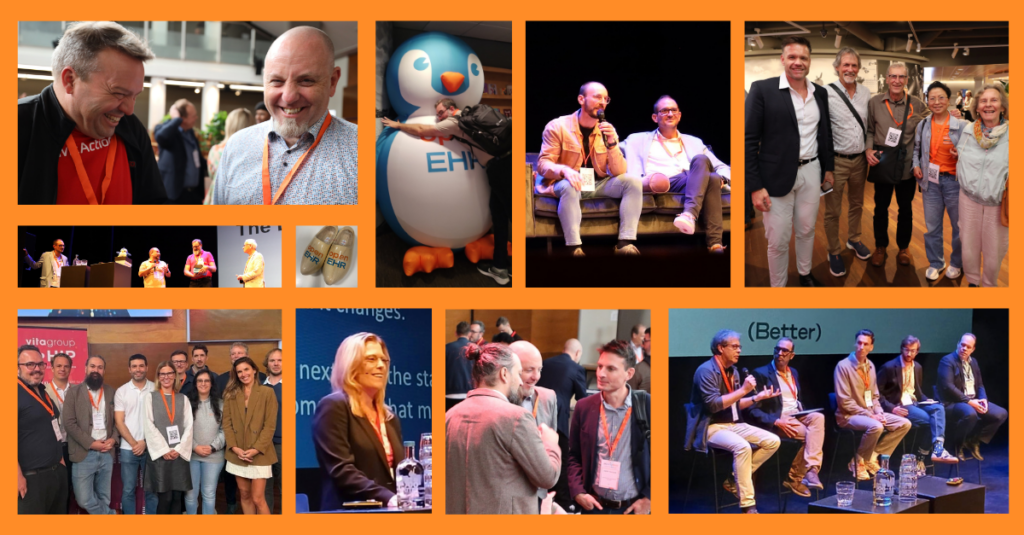
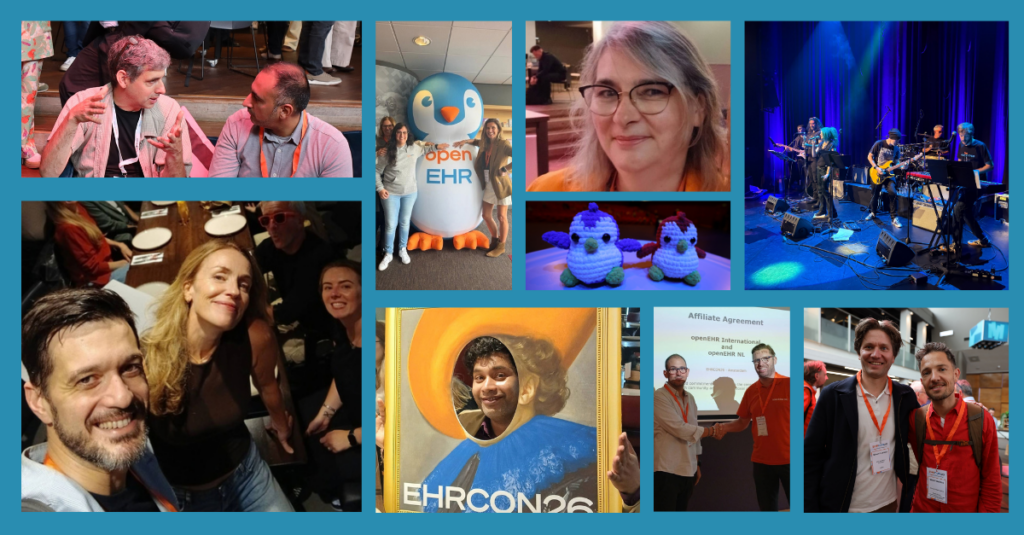
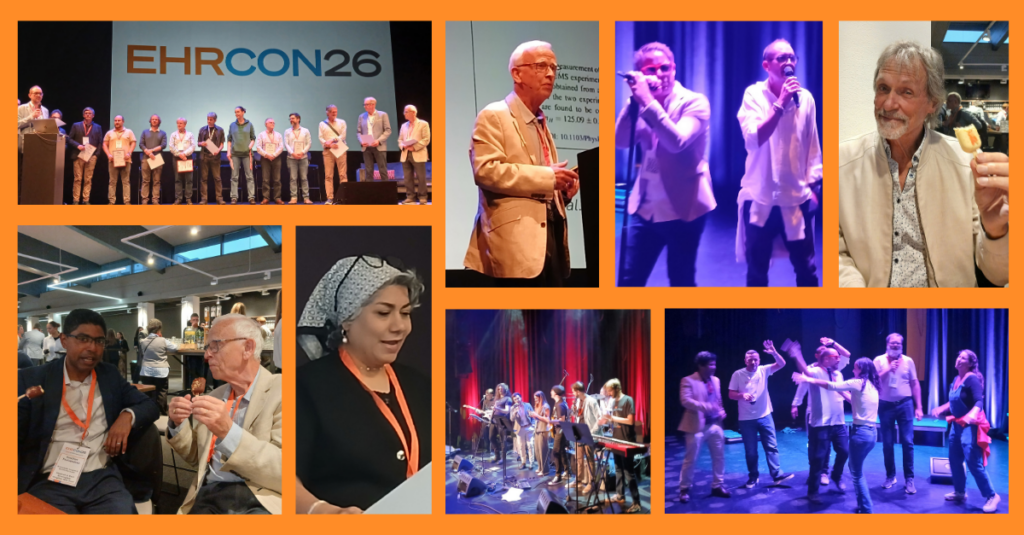
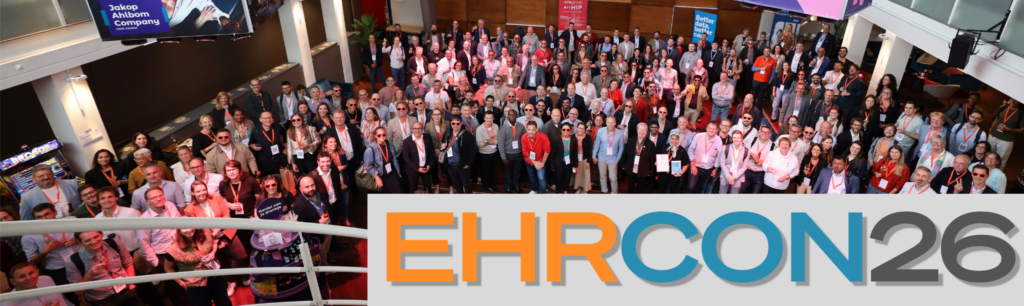
Massive kudos to Abigail Bouvier, Peter Bouvier, Jordi Piera Jiménez and everyone at openEHR International who made EHRCON26 such a warm and thoughtful gathering. I will definitely be back. See you soon!


Leave a Reply