
Software Program
Led by the Software Program Board (SPB)
Guiding the open-source software built on the openEHR specifications, with input from vendors, clinicians, researchers and developers.
What the Software Program does
The Software Program creates open-source platform components and tools built on the openEHR specifications, and takes part in connectathons and implementation trials to test and refine them.
Whether you’re a vendor, clinician, researcher or developer, the Software Program Board (SPB) is where decisions about openEHR’s software direction are made, and your input helps shape them.
- Strategic leadership: open-source strategy, direction for tooling and clinical data repositories, and reference architecture blueprints.
- Governance of new and existing openEHR software products.
- Roadmaps and releases for open-source deployments and other software.
- Change management: reviewing issues and Change Requests and taking changes through the development lifecycle.
- Community communication: sharing roadmap updates, releases and requests for input.
- Risk and reporting to the openEHR International Board.
How it works
The SPB governs the Software Program under the authority of the openEHR International Board. Its membership follows a meritocratic model, inspired by the Apache Software Foundation and other major open-source organisations, and aims to represent vendors, healthcare professionals and government.
The board meets online at least monthly and collaborates in between. Decisions are made by consensus, with formal voting when needed. Expert Panels bring in specialist knowledge, and Working Groups carry out sustained pieces of work.
Governance
The SPB’s membership, governance documents and activities are published openly on Confluence.
Get involved
Follow the board’s work
Roadmaps, Change Requests, governance documents and Working Group outputs are published on Confluence.
SPB on ConfluenceJoin the conversation
Introduce yourself, ask questions or follow the board’s discussions.
SPB on DiscourseTalk to other implementers
Much openEHR software is built independently by researchers and companies. Connect with them in the forums.
Implementation forum
The Software Program Board (SPB)
Co-Chairs
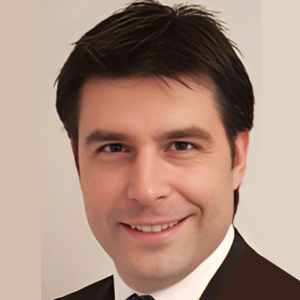
Dr Luis Marco-Ruiz
Co-Chair
Read bio
Luis is a data engineer at the HiGHmed consortium, focusing on the adoption of information standards and terminologies for clinical data reuse and clinical decision support. He holds an MSc in Applied Statistics and a PhD in Health Science. Since 2007 he has worked as a developer, adviser and researcher on projects in Norway, Germany, the UK and Spain. At the Norwegian Centre for E-health Research, which he joined in 2013, he develops national data reuse infrastructures and advises Norwegian health authorities on clinical information standards and biomedical ontologies. He is also a semantic interoperability specialist at the Peter L. Reichertz Institute for Medical Informatics at Hannover Medical School, building HiGHmed’s cross-institutional data reuse network.
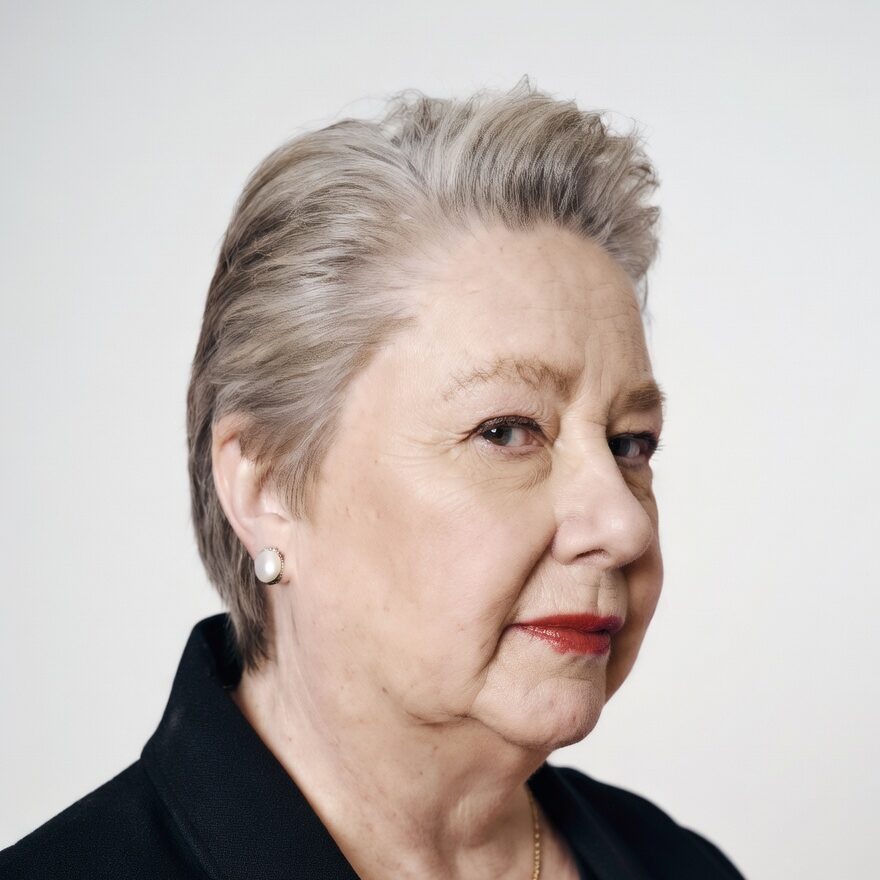
Monica Jones
Co-Chair
Read bio
Monica is Chief Data Officer for DATA-CAN, the HDR UK Data Research Hub for Cancer, Associate Director of HDR North, and Executive Lead for Population Health Management for the Yorkshire and Humber Care Record (YHCR). An ISEB-qualified enterprise and solutions architect, she has a track record of designing and delivering complex, high-value solutions, and as Managing Director of Animo Consultancy has advised CRUK, the MRC, Genomics England, NHS England and the MOD. Most recently on the NHS front line, she was CIO at The Rotherham NHS Foundation Trust, which was rated Outstanding for digital in 2019. An expert in clinical terminology and data standards (SNOMED CT, ICD-10, HL7 FHIR), she is Deputy Chair of the NHS Digital Data Design Authority and Chair of the YHCR Data Architecture Design Authority.
Members
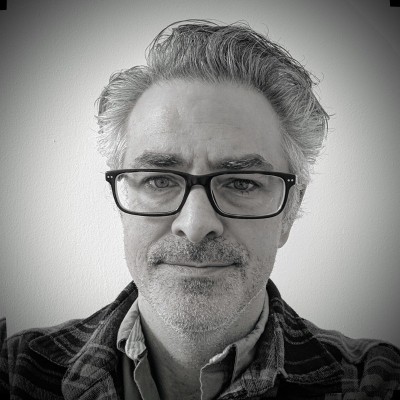
Dr Marcus Baw
Systems Administrator, openEHR International
Read bio
Marcus is openEHR International’s Systems Administrator. A medical doctor, software engineer and open-source campaigner based in the UK, he has worked with the Royal College of Paediatrics and Child Health to pioneer open-source digital growth chart software that is used across the UK and internationally.
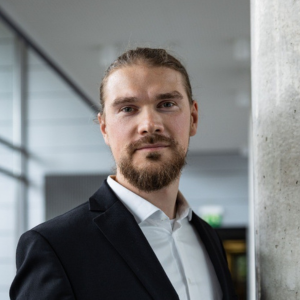
Pascal Biermann
Read bio
Pascal completed both his Bachelor’s and Master’s degrees in Computer Science at Leibniz University Hannover. After graduating, he began working as a research assistant at the Peter L. Reichertz Institute for Medical Informatics (PLRI) at Hannover Medical School, as part of the HiGHmed consortium. His work at the PLRI focused on creating the infrastructure of the Medical Data Integration Center (MeDIC), and he was lead developer of the Smart Infection Control System (SmICS) for the Infection Control use case. He also supported the adaptation of SmICS into Co-Surv-SmICS during the COVID-19 pandemic. In 2022 he took up his current position in the Big Data in Medicine division at the Carl von Ossietzky University of Oldenburg, where his research focuses on medical interoperability and communication standards, particularly openEHR. He sits on the IT Strategy Board of University Medicine Oldenburg (UMO), supports the MeDIC-UMO, and is one of the leaders of the German openEHR Modeling Group (GoEMG).
Jonas Bucher
Iago Corbal
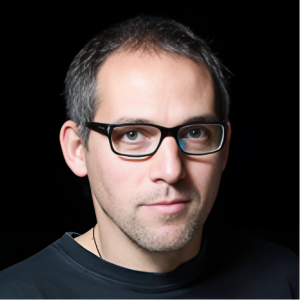
Giovanni Delussu
Read bio
Giovanni is an aeronautical engineer who graduated from the Polytechnic of Turin in 1998 and holds a PhD in Biomedical Informatics and Engineering from the University of Cagliari (2017). He is a researcher in the Digital Health group at CRS4. His career has spanned computational fluid dynamics, boat and sail hydrodynamics, combustion modelling, cardiac valve simulation, the Rubbia Mars rocket project, concentrated solar power and big data. His current research focuses on digital health, standards and interoperability frameworks such as openEHR, FHIR and OMOP CDM, and FAIR principles. He has been a member of the BBMRI-ERIC CS-IT working group since 2021.
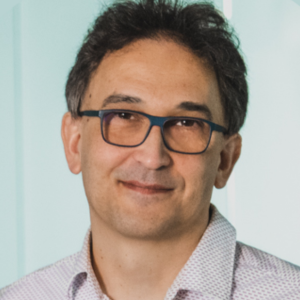
Sebastian Iancu
Read bio
Early in his career, Sebastian developed complex web applications for healthcare in Romania and then the Netherlands, with interests in data interoperability, telemedicine and knowledge-based systems. After an engineering degree in Automation and Computer Science, he built a new PHP-based implementation of the openEHR specifications. In 2010 he co-founded Code24 BV (now Cadasto), where he has been lead software engineer ever since. Its openEHR-based solutions (Base24, mConsole) support more than 100,000 patients and their care providers in Dutch mental healthcare. He has been a co-chair of the Specifications Editorial Committee since May 2020.
Kathir Kaliyaperumal

Martin Andreas Koch
Read bio
Martin is a clinical knowledge modeller and Clinical Knowledge Administrator (CKA) for CatSalut’s CKM. With a background in biomedical engineering, he has worked on hardware and software in medical technology at every stage of product creation, from in-vitro studies to clinical trials and regulatory compliance. Now focused on public-sector interoperability, he brings deep experience in quality systems and design, and aims to build scalable openEHR tools for a more connected health ecosystem.
Adnan Marvillo
Daniel McCafferty
Jesús Pulgarín Paños
Michael Schnell
James Shelbourne
Resources
- SPB on Confluence
Roadmaps, Change Requests and governance documents.
- SPB on Discourse
Discussion and announcements from the board.
- Implementation forum
Talk to others building openEHR software.
- Specifications forum
Discuss the specifications the software implements.
- openEHR on GitHub
Open-source openEHR code.
- Libraries and SDKs
Libraries for building on openEHR.
Other openEHR programs
- Clinical Program
The shared library of clinical models: archetypes, templates and terminology subsets.
- Specifications Program
The openEHR specifications: the technical standard every openEHR system is built on.
- Education Program
Recognised educators and the skills the world needs to adopt openEHR.